What Makes a Reliable Shenzhen International Trading Company?
Introduction: The Trust Problem in China Sourcing
Every week, thousands of importers around the world send money to Shenzhen. Some get exactly what they paid for — high-quality products, delivered on time, at a fair price. Others get substandard goods, missed deadlines, hidden fees, and weeks of frustrating WeChat ping-pong trying to resolve issues.

The difference often comes down to one factor: the reliability of the Shenzhen trading company on the other end of the transaction.
Finding a reliable Shenzhen International Trading Company is consistently ranked as the top challenge for global buyers sourcing from China. Unlike manufacturing giants like Foxconn or BYD, the vast majority of Shenzhen’s trading ecosystem consists of small to medium enterprises — some excellent, some mediocre, and some outright predatory. The city’s Huaqiangbei electronics markets alone host thousands of registered trading companies, and while many are legitimate and professional, the sheer density makes quality hard to gauge from afar.
How do you separate a dependable Shenzhen Trading Company from one that will waste your time, money, and patience? What specific characteristics, systems, and practices separate the best from the rest?
In this comprehensive guide, we’ll break down the anatomy of a reliable Shenzhen foreign trade company. We’ll look at the operational frameworks, quality control systems, communication standards, and logistical capabilities that define excellence in China’s most dynamic trading hub. Whether you’re sourcing electronic components, consumer goods, or industrial equipment, understanding these criteria will save you thousands of dollars and countless hours of frustration.
Section 1: The Shenzhen Trading Landscape — Why Quality Varies So Much
1.1 The Scale of the Ecosystem
To understand why finding a reliable Shenzhen International Trading Company is so challenging, you need to grasp the sheer scale of the market. Shenzhen is home to:
- Over 400,000 registered import-export companies (as of 2024)
- 50+ specialized wholesale markets covering electronics, hardware, textiles, packaging, and more
- The world’s largest electronics market — Huaqiangbei (华强北) — spanning 20+ buildings with 50,000+ individual vendors
- 30+ major industrial parks including the Shenzhen High-Tech Industrial Park and the Qianhai Shenzhen-Hong Kong Modern Service Industry Cooperation Zone
This density creates incredible opportunities for buyers. If you need an obscure electronic component, a custom mechanical part, or a specialized packaging solution, Shenzhen has it. The challenge is finding a trading partner who can navigate this ecosystem ethically and efficiently on your behalf.
1.2 The Three Tiers of Shenzhen Trading Companies
In practice, most Shenzhen foreign trade companies fall into one of three categories:
| Tier | Typical Profile | Strengths | Weaknesses | % of Market |
|---|---|---|---|---|
| Tier 1: Integrated Trade & Logistics | Established 5+ years; in-house QC, logistics, sourcing teams; multi-industry expertise | Full accountability, transparent pricing, end-to-end service | Higher minimum order quantities (MOQs); premium pricing | ~15% |
| Tier 2: Specialized Sourcing Agents | 2–5 years; deep expertise in 1–2 product categories; small but dedicated team | Category expertise, flexible MOQs, competitive pricing | Limited logistics support; may struggle with multi-category sourcing | ~35% |
| Tier 3: Independent Traders/Brokers | 1–3 years; often solo or 2–3 person operations; may work from shared offices | Lowest pricing; flexible to a fault; highly responsive to small orders | High risk; limited QC; no recourse if problems arise | ~50% |
The key insight: pricing correlates inversely with reliability in many cases. The cheapest quote often comes from a Tier 3 trader who has minimal overhead but also minimal accountability. A reliable Shenzhen Trading Company in Tier 1 will have higher prices — but their cost reflects genuine value in the form of quality assurance, documentation accuracy, and logistics integration.
1.3 The Huaqiangbei Factor
No discussion of Shenzhen trading companies is complete without addressing Huaqiangbei — the legendary electronics marketplace that processes an estimated $3–5 billion in component transactions annually. For a Shenzhen International Trading Company, deep familiarity with Huaqiangbei is non-negotiable if they claim to do electronic component sourcing.
A Huaqiangbei-savvy trading company:
- Maintains relationships with at least 20–50 preferred vendors across different buildings (Seg Plaza, SEG Market, Tongtai Market)
- Knows which vendors specialize in genuine components vs. surplus vs. refurbished
- Can verify component authenticity through visual inspection, dimension checking, and (where necessary) basic functional testing
- Understands pricing dynamics — genuine STMicroelectronics or Texas Instruments ICs have stable pricing, while passive components (resistors, capacitors) fluctuate based on market availability
Case Study — The $50,000 Counterfeit Lesson:
A German automotive parts manufacturer sourced 10,000 microcontroller units (MCUs) from a Tier 3 Huaqiangbei trader in 2023. The price was 40% below the official distribution channel ($2.80/unit vs. $4.70/unit). The components passed a cursory visual check. Six months later, 12% of the MCUs failed in field use. Forensic analysis revealed:
- The ICs were re-marked (lower-spec chips with the surface ground off and new markings laser-etched)
- Performance degradation started at ~60°C — 15°C below the specified operating range
- Total cost of failure: $50,000 in replacement parts + $180,000 in warranty claims + unknown brand reputation damage
The German company now works exclusively with a Tier 1 Shenzhen International Trading Company that conducts 100% incoming inspection at their own Huaqiangbei-adjacent QC facility. The 40% price premium on components ($1.90/unit) is trivial compared to the cost of failure.
Section 2: Core Capabilities of a Reliable Shenzhen Trading Company
2.1 In-House Quality Control Infrastructure
The single most reliable indicator of a trading company’s quality is whether they have in-house quality control capabilities. Not outsourced — in-house.
Here’s what to look for:
| QC Capability | What It Covers | Why It Matters |
|---|---|---|
| Incoming inspection | Raw materials, components, sub-assemblies from suppliers | Catches problems before production begins |
| During-production (DUPRO) inspection | First-article check, process audit, random in-line sampling | Prevents mass defects — the “90% defect discovered at 90% completion” trap |
| Pre-shipment inspection (PSI) | AQL sampling (ANSI/ASQ Z1.4), functional tests, packaging check | Final quality gate before payment |
| Container loading supervision | Count, stowage, seal verification | Prevents short-shipments and damage in transit |
A Shenzhen Trading Company with these capabilities will typically:
- Maintain a dedicated QC team of 3+ inspectors (ideally with engineering backgrounds)
- Have a physical inspection room with calibrated tools (calipers, multimeters, torque testers, etc.)
- Use digital inspection reports with photos and video evidence
- Apply ANSI/ASQ Z1.4 (AQL) sampling standards or equivalent
2.2 Transparent Supply Chain Mapping
A reliable Shenzhen International Trading Company should be able to show you — not just tell you — where your products come from. This means:
Supplier Vetting Documentation:
- Business license (营业执照) — verified through China’s National Enterprise Credit Information System
- Factory audit reports (with photos, equipment list, worker count, production capacity)
- Third-party certifications (ISO 9001, BSCI, FDA registration where applicable)
- Previous audit results from other buyers (with permission)
Supply Chain Traceability:
- Tier 1 suppliers (direct manufacturing partners) — identified and documented
- Tier 2 suppliers (raw material sources) — identified where critical
- Subcontractor arrangements — disclosed, not hidden
Transparency is the hallmark of a trustworthy Shenzhen foreign trade company. A company that hesitates to share supplier information or factory audit reports is likely either a broker (no real supplier relationship) or hiding quality issues.
2.3 Multi-Modal Logistics Integration
Modern international trade requires more than just sourcing. A reliable trading company seamlessly integrates logistics into every deal. The best Shenzhen International Trading Company should offer:
- Cross-border trucking (Shenzhen to Hong Kong, for air freight consolidation)
- Ocean freight (FCL and LCL from Yantian, Shekou, or Nansha ports)
- Air freight (from Shenzhen Bao’an or Hong Kong International Airport)
- Express courier (DHL, FedEx, UPS, TNT for samples and small orders)
- Door-to-door / DDP delivery (Delivered Duty Paid — full landed cost solution)
Case Study — How Integrated Logistics Saved a Client 22% on Total Landed Cost:
A UK skincare brand was sourcing custom bottles and pumps from five different Shenzhen suppliers. Previously, they managed each supplier separately — five different contacts, five different shipments, five different export declarations. The logistics coordinator at a company like Xineee consolidated all five suppliers’ goods at one Shenzhen warehouse, performed a combined QC inspection, trucked everything to HK as one consolidated load, and shipped it on a single air waybill to London Heathrow.
| Metric | Before (5 separate shipments) | After (Consolidated via Integrated Trading Co.) | Improvement |
|---|---|---|---|
| Freight cost | £2,850 | £1,920 | 33% reduction |
| Customs brokerage fees | £450 | £220 | 51% reduction |
| Transit time | 12–18 days (varied per supplier) | 7–9 days (single consolidated delivery) | 40% faster |
| Documentation errors | 1.2 per order average | < 0.1 per order | 90% fewer errors |
| Total landed cost | £6,430 | £5,020 | 22% reduction |
The brand now uses the same Shenzhen Trading Company for sourcing AND logistics, eliminating the “handoff friction” that previously cost them time, money, and headaches.
Section 3: Communication Standards — How to Spot Professionalism Before You Pay
3.1 The Response Time Benchmark
How quickly a Shenzhen International Trading Company responds to your inquiries is a surprisingly reliable quality indicator. Industry benchmarks for professional trading companies:
| Inquiry Type | Expect Response Within | Red Flag |
|---|---|---|
| Initial RFQ (Request for Quotation) | 24 hours (business days) | > 48 hours without explanation |
| Follow-up questions during negotiation | 4–8 hours during business hours | > 24 hours |
| Order status update requests | 2–4 hours | > 12 hours |
| Issue/complaint escalation | 1–2 hours | > 8 hours (or defensive response) |
| Urgent production/shipping questions | 30–60 minutes | > 2 hours |
Caveat: Time zones matter. If you’re in New York and they’re in Shenzhen (12-hour difference), expect a 12-hour lag in responses. A professional company bridges this gap by:
- Having staff available during both Chinese (9 AM–6 PM CST) and overlapping global hours
- Responding to non-urgent queries with a clear “I will investigate and reply within X hours” acknowledgment within 2 hours
- Using tools like WeChat, WhatsApp, and email reliably
3.2 The Quality of Quotations
A quotation from a reliable Shenzhen Trading Company should include, at minimum:
- Product specifications — exact model numbers, dimensions, materials, colors, packaging
- Unit price and MOQ — clearly stated with any tiered pricing for higher volumes
- Payment terms — standard is 30% deposit / 70% before shipment (T/T); L/C at sight for larger deals
- Incoterms — EXW (Ex Works), FOB Shenzhen/HK, CIF, or DDP clearly specified
- Lead time — production time and estimated shipping time
- Validity period — how long the quoted price is valid (typically 7–15 days)
- Exclusions — what’s not included (e.g., samples, rush fees, special packaging, certifications)
Red flag quotes:
- Vague pricing like “around $5/piece, negotiable”
- No Incoterms specified
- Validity period shorter than 5 days (indicates price volatility or gamesmanship)
- Price changes after you place a deposit (indicates poor supplier relationships)
3.3 Language and Documentation Quality
While perfect English is not required for a Shenzhen foreign trade company, a reliable partner demonstrates professionalism through:
- Clear written communication — not necessarily perfect grammar, but logical, well-organized, and responsive to the specific points you raise
- Professional documentation — commercial invoices, packing lists, and certificates that comply with international standards
- Proactive information sharing — they tell you about potential issues BEFORE you ask (e.g., “Component XYZ has a 3-week lead time, so we recommend ordering now”)
Case Study — A $15,000 Lesson in Documentation:
A Brazilian importer of industrial sensors paid a $15,000 deposit via T/T to a Shenzhen trader in early 2024. The trader’s quotation was competitive and their responses were prompt. But when the goods were shipped, the commercial invoice:
- Described the product incorrectly (wrong HS code)
- Listed the wrong unit price (mismatched the PI)
- Failed to include the country of origin declaration
Result: Brazilian customs seized the shipment for document discrepancies. The importer paid $3,800 in storage fees, $1,200 in penalties, and waited 23 days for resolution. The “cheap” quote ended up costing 40% more than a professional trading company’s quote would have — with better documentation, the shipment would have cleared customs in 2 days.
Section 4: Quality Control Systems — The Operational Backbone
4.1 Beyond AQL: What Good QC Looks Like
Many trading companies claim to have “QC.” The reality is that QC ranges from a quick visual check at the supplier’s loading dock to comprehensive testing at an independent facility. Here’s what separates professional Shenzhen International Trading Company QC from token inspection:
Stage 1: Pre-Production QC
- Raw material verification (e.g., checking plastic pellet grade, metal alloy composition, fabric GSM)
- First-article inspection (FAI) — checking the first sample against all specification dimensions, colors, and tolerances
- Production readiness check — is the factory capable of meeting the order quantity and timeline?
Stage 2: During-Production (DUPRO)
- In-line inspection at 20–30% and 60–80% completion stages
- Process audit — verifying that assembly, soldering, molding, etc., follow SOPs
- Random destructive testing (e.g., peel tests, drop tests) on a sample from the current production batch
Stage 3: Pre-Shipment Inspection (PSI)
- AQL sampling at 2.5 or 1.0 critical level (depends on product risk)
- 100% functional testing for electronics and safety-critical components
- Packaging integrity check, shipping mark verification, loading quantity count
Stage 4: Container Loading Supervision
- Count verification — every carton counted and tallied against the packing list
- Random carton opening — 10–20% of cartons opened for spot-check
- Loading photo/video documentation — provides evidence in case of shipping damage claims
4.2 Third-Party vs. In-House: Which Is Better?
Both approaches have merits, but in-house QC is generally stronger for complex sourcing:
| Aspect | In-House QC | Third-Party QC (SGS, Bureau Veritas, TÜV, Intertek) |
|---|---|---|
| Cost per inspection | $150–$400 (built into margin) | $350–$1,200 per inspection |
| Flexibility | Same-day scheduling possible | 3–7 day booking lead time |
| Product knowledge | Deep — inspectors understand product specs intimately | General — may miss category-specific issues |
| Objectivity | Company-internal; potential conflict of interest | Fully independent; legally defensible reports |
| Coverage | Can inspect frequently (weekly or daily DUPRO) | Typically only PSI (1–2 times per order) |
Best practice: A Tier 1 Shenzhen Trading Company uses in-house QC for routine inspections (DUPRO, PSI) and suggests third-party inspection for first orders with new suppliers or for high-risk products. Xineee, for example, maintains an in-house QC team of 5 inspectors while also partnering with SGS for independent audits when clients require them.
4.3 The Cost of Poor QC: Real Numbers
Let’s quantify what happens when a Shenzhen foreign trade company skips proper QC:
| Scenario | QC Cost Saved | Financial Impact of Failure |
|---|---|---|
| 5,000 consumer electronics units, $10/unit | $400 (skipped PSI) | 15% defect rate = $7,500 in returns + $4,000 in customer refunds |
| 10,000 garment pieces, $8/unit | $500 (skipped DUPRO) | 8% size/color mismatch = $6,400 in markdowns + $3,200 in return shipping |
| 2,000 industrial parts, $45/unit | $350 (skipped FAI) | 20 parts out of tolerance = $900 in rework + $2,500 in expedited shipping to meet deadline |
| 1 container of furniture, FOB $28,000 | $600 (skipped loading supervision) | Short-shipped by 8% (claimed 220 sets, shipped 202) = $2,240 loss + $1,800 in claim admin |
The pattern: QC costs are typically 0.5–2% of order value. Defects arising from inadequate QC cost 5–20% of order value. Every dollar spent on QC saves $5–$20 in failure costs.
Section 5: Step-by-Step Checklist — Vetting Your Shenzhen Trading Company
Use this checklist when evaluating a potential partner. It covers the essential due diligence steps, from initial contact through order execution.
✅ Step 1: Verify Legal Registration and Licenses
What to do: Ask for the company’s:
- Unified Social Credit Code (统一社会信用代码) — China’s company registration number
- Business License (营业执照) — with the business scope clearly showing “import and export” (进出口)
- NVOCC license (if they handle shipping) — Non-Vessel Operating Common Carrier certification
Cross-reference the registration number with China’s National Enterprise Credit Information System (gsxt.gov.cn) — ideally through your trading partner’s help or a third-party service.
Why this works: Registered companies are accountable to Chinese commercial law. You have legal recourse if issues arise. Tier 3 traders operating without formal registration are high-risk — they can disappear and re-register under a new name with no consequences.
✅ Step 2: Request and Evaluate Samples
What to do: Before any production order:
- Request 2–5 samples of the products you intend to source
- Verify the samples match your specifications (dimensions, materials, weight, functionality)
- Keep one sealed sample as your “gold standard” for production comparison
- If possible, visit the sample yourself or have a third party verify it
Why this works: A reliable Shenzhen International Trading Company maintains a proper sample management system. They will:
- Track samples with QR codes or labels
- Send samples with detailed specification sheets
- Keep reference samples for production comparison
Companies that are reluctant to send samples, send poor-quality samples, or send products that don’t match your specs are telegraphing future problems.
✅ Step 3: Conduct a Factory Audit (or Hire One)
What to do: For any order above $10,000, arrange an audit of the actual production factory. Options:
- In-person visit (best): Spend 2–4 hours touring the facility, meeting the production manager, checking equipment
- Video call audit (good): Live WeChat video showing production lines, warehouse, QC station
- Third-party audit (SGS, Bureau Veritas, TÜV): $500–$2,000 for a comprehensive report including ISO conformance
Why this works: A factory audit reveals:
- Actual production capacity (can they really produce 10,000 units in 30 days?)
- Working conditions (ethical sourcing considerations)
- Equipment quality (are they using modern or obsolete machinery?)
- Inventory and raw material stock (do they have the materials to meet your order?)
A Shenzhen Trading Company that resists factory audits is likely either:
- A middleman without direct factory access
- Working with a substandard factory they don’t want you to see
- Lazy — and unreliability in allowing audits predicts unreliability in everything else
✅ Step 4: Negotiate Clear Payment Terms with Milestones
What to do: Structure payments to align with delivery of value:
- 30% deposit — to initiate production (covers raw material purchase)
- 40% upon DUPRO completion — after you receive a mid-production inspection report and photos
- 30% before shipment — after PSI clearance and before cargo leaves the factory
Alternative structure for long-standing relationships:
- 30% deposit / 70% against scanned B/L (bill of lading) — common for repeat clients with established trust
- L/C at sight — for large orders ($50,000+) using letters of credit through banks
Why this works: Payment terms are the single most powerful lever for protecting your interests. A reliable Shenzhen International Trading Company will be flexible on payment milestones for well-structured orders. Insistence on 100% payment before shipment is a major red flag (unless it’s a first small order under $1,000).
✅ Step 5: Establish Communication Protocols
What to do: Define:
- Primary channel: WeChat (universal in China), WhatsApp, or email?
- Response time expectations: e.g., “reply to all queries within 8 business hours”
- Escalation contacts: Who to contact if the primary contact is unresponsive
- Language: Agree on English (or whatever language) and request confirmation that the contact is fluent enough for the complexity of your order
- Weekly call: Schedule a 15-minute weekly call or video meeting
Why this works: Clear communication protocols prevent the #1 source of sourcing friction — asynchronous, unclear, or delayed responses. Professional Shenzhen foreign trade companies will welcome these protocols because they reduce their own operational confusion too.
✅ Step 6: Define QC Protocol in the Contract
What to do: Write QC requirements into the purchase contract:
- Sampling standard (AQL 1.0, 2.5, 4.0 based on product criticality)
- What constitutes a defect (specify tolerances: dimension ±2mm, color Delta E < 2, etc.)
- What happens if inspection fails (rework, re-inspection, rejection, discount)
- Who bears the cost of failed inspections (typically the supplier)
Why this works: The most common sourcing disputes arise from ambiguous quality expectations. “Good quality” means different things to different people. Writing specifications into the contract eliminates ambiguity. A reliable Shenzhen Trading Company will help you define realistic specifications — not just accept whatever you say.
✅ Step 7: Build a Trial Order Before Scaling
What to do: Start with:
- Sample order: 5–20 units (verify product suitability)
- Trial production order: 100–500 units (validate production consistency)
- Pilot order: 1,000–5,000 units (test logistics and delivery)
- Full production: Scale to your target volume
Why this works: Most sourcing disasters happen when buyers go straight to full production without a trial cycle. A trial reveals:
- Whether the factory can maintain quality at scale
- Whether the communication channels are effective under pressure
- Whether the logistics chain works end-to-end
- Whether the trading company’s support holds up when problems arise
A reliable Shenzhen International Trading Company will actively encourage this phased approach — it reduces risk for BOTH parties and builds a stronger working relationship.
✅ Step 8: Build Redundancy Into Your Supply Chain
What to do: Even after you find a great Shenzhen foreign trade company, maintain:
- A secondary supplier for your top 3–5 SKUs (even at higher cost)
- Enough safety stock to cover 4–6 weeks of supply chain disruption
- A backup logistics provider for critical shipping routes
Why this works: No single company is immune to disruption. Chinese New Year, factory fires, component shortages, shipping container crises, and trade policy changes can all interrupt supply. The most reliable trading companies acknowledge this reality and help you build contingency plans — they don’t pretend nothing can go wrong.
Section 6: Case Studies — Reliable vs. Unreliable Trading Companies
6.1 Case Study A: The Reliable Partner (Xineee — Integrated Trade & Logistics)
Client: A Canadian home automation startup launching a line of smart plugs and sensors
Challenge: Start-up with limited cash flow needed low MOQs, fast turnaround, and consistent quality across 12 SKUs. Previous sourcing agent failed — delivered 40% defective units.
Why This Shenzhen International Trading Company Worked:
| Factor | What They Did | Impact |
|---|---|---|
| Supplier selection | Audited 8 factories; selected one with ISO 9001 and specific smart-home experience | Zero production-line failures |
| QC Protocol | 100% functional testing for electronics; AQL 1.0 for cosmetic defects | < 0.3% defect rate at delivery |
| Payment flexibility | Split into 3 milestones with 20% deposit | Preserved startup cash flow |
| Documentation | Prepared all export docs, certificates of origin, and FCC compliance paperwork | Customs clearance in 2 days (vs. 7–14 days typical) |
| Logistics | Consolidated all 12 SKUs into one HK shipment; air freight to Vancouver | 22% freight savings vs. individual shipments |
Result: Product launched on time, within budget. Defect rate after 6 months: 0.8% (industry average: 3–5%). Client scaled to 42 SKUs within 14 months.
Key Lesson: A Tier 1 Shenzhen foreign trade company pays for itself through reduced defects, better documentation, and integrated logistics — even at a 15–20% price premium over broker quotes.
6.2 Case Study B: The Unreliable Broker — A Cautionary Tale
Client: A US toy company sourcing 5,000 units of a custom educational toy
The Setup: Found a Shenzhen-based “trading company” on Alibaba with good reviews. Price was 30% below other quotes. Communication was excellent during negotiation.
The Problems:
-
Supplier misrepresentation: The broker claimed to work with “their own factory.” In reality, they subcontract to three different factories without the client’s knowledge. Different factories produced different components, leading to color variations and fit issues.
-
QC Evasion: The broker insisted “no PSI needed — our quality is guaranteed.” When the buyer pushed, the PSI showed 22% defect rate (mostly: parts didn’t snap together properly, colors didn’t match across batches).
-
Hidden Fees: Initial quote was EXW ¥28/unit. After deposit, new costs appeared: “QC fee” ¥3,000, “documentation fee” ¥1,500, “sample approval fee” ¥800.
-
Communication Breakdown: After payment issues arose, response time went from 2 hours to 3 days. The broker’s WeChat went dark for two weeks during a critical production phase.
Financial Impact:
| Issue | Cost |
|---|---|
| Color variation (markdown) | $4,800 |
| Fit issues (returned by retailer) | $12,500 |
| Expedited replacement production | $6,200 |
| Lost shelf space and launch delay | Estimated $25,000 in lost revenue |
| Legal fees to recover deposit | $3,500 |
| Total | $52,000+ |
Key Lesson: The cheapest quote is the most expensive in the long run. A 30% price saving on the unit cost was entirely erased by failure costs — and then some.
6.3 The Structural Differences
| Dimension | Reliable Trading Co. | Unreliable Broker |
|---|---|---|
| Office/Warehouse | Physical office + warehouse you can visit | Virtual office or shared co-working space |
| Team size | 10–50+ staff (sourcing, QC, logistics, admin) | 1–5 people, often family-run |
| Supplier relationships | Direct factory contracts, 3–5 year relationships | Ad-hoc supplier sourcing per order |
| QC | In-house team with calibrated tools | May outsource to freelance inspectors |
| Payment flexibility | Multiple milestone structures | All or nothing — 30/70 or 50/50 |
| Responsiveness | Consistent, professional | Good during sales, declines after payment |
| Liability | Registered company, legal accountability | May be unregistered or shell entity |
Section 7: Payment, Contracts, and Legal Protection
7.1 Structuring Safe Payment Terms
The standard payment structure in China’s trading industry — 30% deposit / 70% before shipment — evolved because it balances the interests of both parties. Let’s examine why:
- 30% deposit: Covers the supplier’s raw material cost. Without a deposit, the supplier bears the risk of buyer default.
- 70% before shipment (after PSI): Protects the buyer. You don’t pay the balance until you (via the trading company’s QC) have verified the goods meet specifications.
A reliable Shenzhen International Trading Company will:
- Explain the payment structure clearly upfront
- Offer alternatives (L/C, escrow, milestone payments) for larger orders
- Never demand 100% prepayment for standard orders
- Provide supporting documentation (QC reports, photos) before you release the 70% balance
7.2 Contract Essentials for China Sourcing
Your purchase contract with a Shenzhen Trading Company should address:
| Clause | What to Include | Why It Matters |
|---|---|---|
| Product Specification | Exact dimensions, materials, colors (PMS or RAL), tolerances, weight | Foundation of all quality assessment |
| Packaging | Inner pack quantity, carton material and dimensions, labeling requirements | Avoids shipping damage and retail rejection |
| Inspection | AQL standard, who performs it, acceptance criteria, rework process | Defines quality gate |
| Lead Time | Production start date, completion date, shipping date, per-day delay penalty | Enforces accountability |
| Force Majeure | Events that excuse delay (fire, flood, government action) | Sets realistic expectations |
| Dispute Resolution | Governing law (Chinese or international), arbitration venue (CIETAC, HKIAC, SIAC) | Defines how disputes are resolved |
| Intellectual Property | Non-disclosure agreement (NDA), IP ownership terms | Protects your designs and brand |
7.3 Red Flags in Contracts
Watch out for these warning signs in a Shenzhen International Trading Company’s contract:
- Vague product descriptions: “Similar to sample” without specific measurements
- No QC clause: Or QC waived in favor of “buyer accepts all shipped goods”
- Forced arbitration in remote venues: Insisting on arbitration in a city far from Shenzhen
- No delivery date penalty: “Estimated delivery” without consequences for delay
- One-sided force majeure: Only the supplier (not buyer) can invoke force majeure
If you see these red flags, insist on revisions before signing. A professional Shenzhen foreign trade company will negotiate in good faith.
Section 8: FAQ — Finding a Reliable Shenzhen International Trading Company
Q1: How do I verify a Shenzhen trading company’s registration?
You can verify through China’s National Enterprise Credit Information System at gsxt.gov.cn. Enter the company’s Unified Social Credit Code (统一社会信用代码) — an 18-character alphanumeric code that every registered Chinese company has. The system will show:
- Company name and legal representative
- Registered capital and address
- Business scope (check for “import/export” authorization)
- Operating status (active, revoked, or canceled)
- Annual reports and any administrative penalties
Alternatively, third-party services like Qichacha (企查查) or Tianyancha (天眼查) provide more user-friendly interfaces in both Chinese and English. A reliable Shenzhen International Trading Company will share their registration code without hesitation — it’s public information. Companies that refuse to share their registration code are almost certainly unregistered or have a problematic history.
Q2: What’s the difference between a trading company and a sourcing agent?
The terms are often used interchangeably, but there are distinct differences:
| Aspect | Trading Company | Sourcing Agent |
|---|---|---|
| Scope | Full-service: sourcing, QC, logistics, and often warehousing | Focused on supplier identification and negotiation |
| Legal status | Registered import/export company with own customs code | May be an individual or consulting firm without trade license |
| Logistics | Usually handles shipping and customs | Typically hands off to a freight forwarder |
| Pricing model | Margin built into product price (EXW + markup) | Commission-based (usually 3–10% of order value) |
| Accountability | Takes supplier risk; handles disputes and returns | Acts as intermediary; limited liability |
For most buyers, a registered Shenzhen foreign trade company (like Xineee) offers stronger accountability than a sourcing agent. The trading company puts its reputation and balance sheet behind the transaction; the agent’s liability is limited to their fee.
Q3: How much should I expect to pay a Shenzhen trading company?
Pricing models vary, but typical ranges are:
- Product markup: 5–20% above factory price, depending on complexity and volume
- Commission model: 3–8% of total order value (common for sourcing agents)
- Management fee: $200–$1,000/month for ongoing sourcing relationships
- Logistics margin: Factored into freight rates (usually 10–15% above carrier cost)
- QC fees: $150–$500 per inspection day (included in margin for integrated companies)
The total cost of using a Shenzhen International Trading Company typically adds 8–25% to your product cost compared to dealing directly with factories. The key question is whether this premium saves you more than it costs — and in most cases, it does, through:
- Reduced defect rates (2–5% → < 1%)
- Better logistics pricing (consolidated shipments, better carrier relationships)
- Time savings (40–60% less management overhead)
- Reduced risk of catastrophic failures (like the $52,000 case study above)
Q4: Should I visit the trading company in person?
Yes — and you should. An in-person visit is the single most effective due diligence step. Here’s what to look for:
Positive signs during a visit:
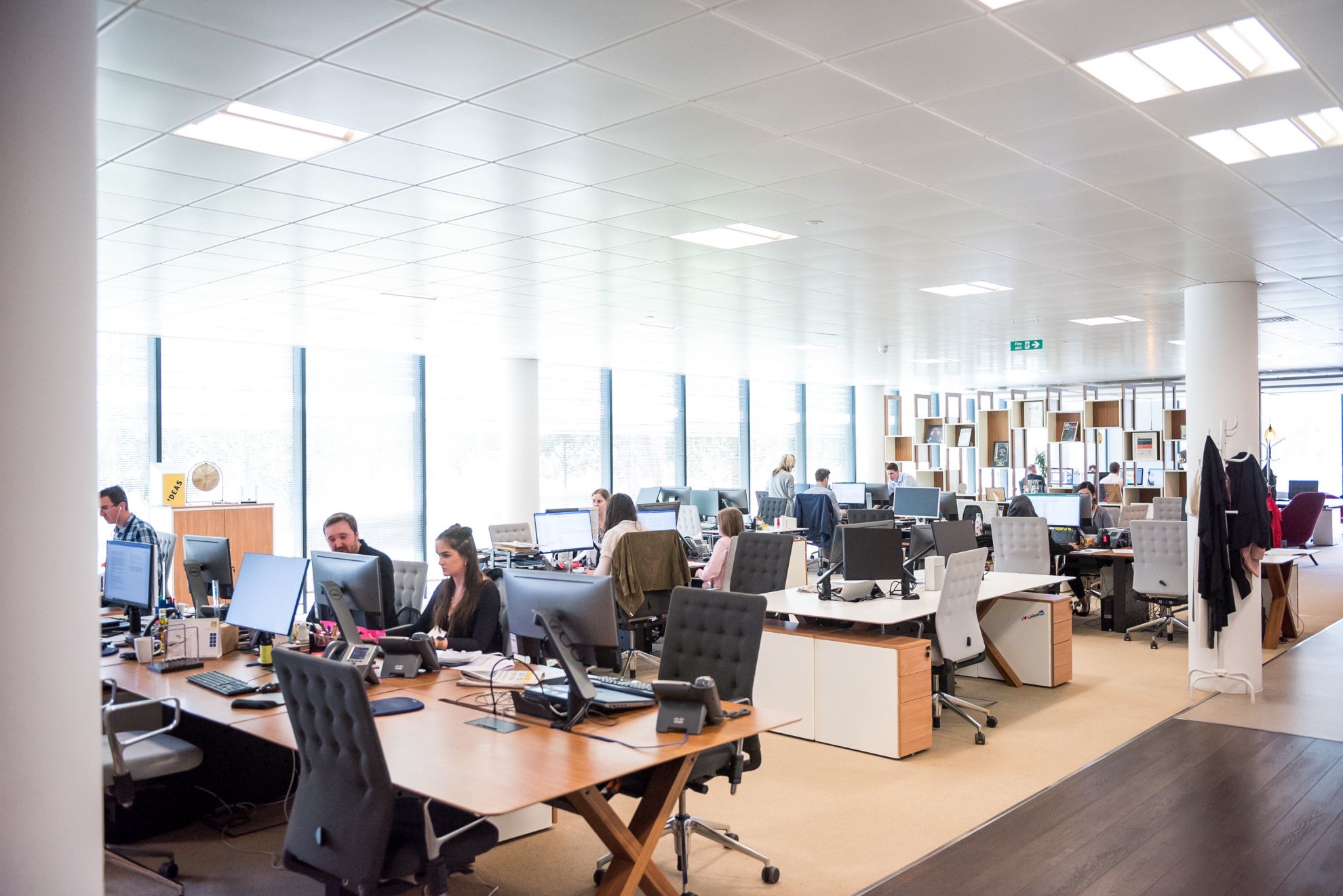
- A dedicated office with 10+ employees working at desks
- A warehouse for sample storage and QC inspection
- A QC room with testing equipment (calipers, multimeters, drop testers, etc.)
- Organized filing and documentation systems
- Staff who can communicate in your language
Negative signs:
- A shared office or co-working space address (common among brokers)
- Only 1–3 people present despite claiming a larger team
- No visible QC equipment or warehouse
- Evasive answers about supplier locations or factory visits
If you can’t visit in person, a video call tour (WeChat video showing the office, warehouse, and team) is a reasonable substitute. Companies that refuse both in-person and video tours are extremely high-risk.
Q5: How long does it take to find and verify a reliable trading company?
A thorough vetting process typically takes 2–4 weeks:
| Phase | Duration | Activities |
|---|---|---|
| Initial research | 3–5 days | Search platforms, collect references, shortlist 3–5 companies |
| Verification | 5–7 days | Registration check, reference calls, sample request |
| Deep due diligence | 5–10 days | Factory audit, contract review, payment terms negotiation |
| Trial order | 2–4 weeks | Sample order, trial production, QC process validation |
Rushing this process — e.g., placing a full production order after only a week of due diligence — is the most common mistake importers make. Reliable Shenzhen Trading Company relationships are built over time, starting with small, low-risk orders that allow both parties to prove their capabilities.
Q6: What happens if the trading company sends poor-quality goods?
Resolution paths depend on your contract and the trading company’s integrity:
-
Contract terms: If your contract specifies an AQL standard and the inspection fails, the supplier must either rework (at their cost), replace, or negotiate a discount. A reliable Shenzhen foreign trade company will enforce these terms on your behalf.
-
Refund/replacement: The best trading companies will proactively offer a remedy. In practice, this means either:
- Arranging rework at the factory at the supplier’s expense
- Offering a discount proportional to the defect rate
- Replacing defective goods on the next production run
-
Legal action: As a last resort, you can pursue legal remedies through Chinese commercial courts or arbitration (CIETAC — China International Economic and Trade Arbitration Commission). This is expensive ($5,000–$20,000 in legal fees) and time-consuming (6–18 months), so prevention through QC is far better than cure.
Q7: Can a Shenzhen trading company help with product design and development?
It depends on the company’s capabilities. Full-service Shenzhen International Trading Companies often offer:
- Design for Manufacturing (DFM): Reviewing your designs for cost optimization and manufacturability
- Prototyping: 3D printing, CNC machining, or mold sampling
- Material selection: Recommending appropriate materials based on cost, durability, and supply
- Packaging design: Custom packaging that meets retail requirements
- Compliance testing: CE, FCC, RoHS, REACH certification management
These services are typically billed separately ($500–$5,000 depending on complexity) or incorporated into the product price for large orders. Companies with engineering staff (3+ years experience) are best positioned for design support.
Xineee, as an integrated Shenzhen foreign trade company, offers DFM review and compliance testing as part of its sourcing packages for clients with ongoing production relationships.
Q8: How do I know if they’re actually a trading company and not a broker hiding as one?
This is one of the most frequent questions in China sourcing. Here are the telltale signs:
Trading Company:
- Has physical inventory (some companies maintain buffer stock)
- Issues their own commercial invoices and packing lists
- Has their own customs clearance code (customs registration number)
- Can take legal responsibility for the goods
- Has an office lease and payroll records (multiple employees)
Broker:
- No inventory — goods ship directly from factory to port
- Invoices are either from the factory or a shell company
- No customs registration — uses the factory’s export license
- Cannot take legal liability — “I just connected you with the factory”
- Operates from shared office, home, or co-working space
A legitimate Shenzhen Trading Company should be able to provide their customs registration number. You can verify this number against customs records (through the trading company’s assistance) to confirm they have an active export license.
Q9: What certifications should a professional trading company have?
While certifications don’t guarantee performance, they indicate professionalism:
| Certification | What It Proves | How to Verify |
|---|---|---|
| Business License (营业执照) | Legal registration in China | Check at gsxt.gov.cn |
| NVOCC License | Authorization to issue bills of lading | Check at MOT China website |
| IATA Accreditation | Licensed for air freight (for logistics providers) | Check at IATA.org |
| ISO 9001 | Quality management system | Check registrar database |
| Membership in trade associations | Industry recognition | Verify with the association directly |
Red flag: A trading company that claims “ISO certified” but cannot provide the certificate or registrar details.
Q10: When should I switch from a broker to a full-service trading company?
Consider upgrading when:
- You’re placing orders quarterly or more frequently — the management overhead of coordinating multiple vendors becomes uneconomical
- Your order values exceed $10,000 per shipment — the risk of QC failures is financially meaningful
- You have more than 3 active SKUs — multi-SKU management requires systems a broker typically doesn’t have
- You’re expanding to new markets — different countries have different compliance and logistics requirements
- You’re spending more than 3 hours/week on sourcing coordination — your time is valuable
Section 9: Summary — How to Choose Your Shenzhen Trading Partner
9.1 The Decision Framework
When evaluating a Shenzhen International Trading Company, consider this weighted scoring system:
| Criterion | Weight | What to Assess |
|---|---|---|
| Legal & registration status | 20% | Verifiable registration, business scope, NVOCC license |
| In-house QC capability | 25% | QC team, equipment, inspection protocols, reporting |
| Supplier relationships | 15% | Direct factory contracts, vetting process, supplier diversity |
| Logistics integration | 15% | Multi-modal capability, cross-border (HK) routing, DDP services |
| Communication quality | 15% | Response time, quotation quality, proactive updates |
| References & track record | 10% | Client testimonials, case studies, years in business |
A company scoring 80/100 or higher across these dimensions is a strong candidate. Below 60/100, the risk of failure is elevated significantly.
9.2 Final Recommendations
- Start with verification, not price. The cheapest quote is statistically the highest-risk. A reliable Shenzhen foreign trade company charges fair prices that reflect their operational capability.
- Phase your orders. Trial → pilot → production. Each phase validates a different aspect of the trading company’s capability.
- Invest in QC. Your $200–400 per inspection fee is the cheapest insurance you’ll ever buy against a $10,000+ failure.
- Build relationships, not transactions. The best Shenzhen Trading Company partners are those who understand your business, your quality standards, and your market. These relationships take time and trust.
- Choose integrated over fragmented. A company that handles sourcing, QC, logistics, and cross-border routing (Shenzhen–Hong Kong) reduces your coordination overhead and eliminates the “handoff problem” that causes most international trade failures.
- Visit when you can. An in-person visit or video tour of the trading company’s office, warehouse, and QC facilities is worth more than a dozen phone calls.
9.3 About Xineee
Xineee is a Shenzhen International Trading Company providing cross-border trade services, freight forwarding, electronic component sourcing, and e-commerce fulfillment. With in-house QC, integrated Shenzhen-Hong Kong Logistics / Freight Forwarding, and a team of experienced sourcing professionals, we help clients reduce risk, improve quality, and lower total landed costs. Our track record spans industries from consumer electronics to industrial equipment, serving clients in North America, Europe, Southeast Asia, and the Middle East.
👉 Visit Xineee.com to learn how a reliable Shenzhen trading partner can transform your supply chain.
Tags
Shenzhen foreign trade company, Shenzhen International Trading Company, Shenzhen Trading Company, Shenzhen to Global via HK, Shenzhen-Hong Kong Logistics, Freight Forwarding Shenzhen, Shenzhen Electronic Component Sourcing, Cross-border E-commerce Fulfillment, Reliable China Sourcing Partner, China Trading Company Due Diligence, Shenzhen Supply Chain, Import from China Shenzhen